
Learn · Part 2 of 4
Craniofacial Development and Airway Health
The way our face, jaws, tongue, and airway develop can influence how we breathe, sleep, eat, and function throughout life.
Structure and Function Grow Together
Our faces and jaws do not develop independently of how we use them. From childhood onward, breathing patterns, tongue posture, chewing, hardness of foods, swallowing, epigenetics and growth all contribute to the relationship between structure and function.
The importance of tongue resting posture
The tongue is especially important. At rest, the whole tongue should normally rest gently against the roof of the mouth, with the lips comfortably closed and breathing occurring through the nose.
Ideally, the tongue maintains this position through gentle, passive suction against the palate, rather than constant muscular effort.
This suction creates a small difference in pressure within the mouth that helps the tongue remain elevated and supported. The pressure encourages the soft palate to hug against the back of the tongue, keeping the airway open. It also encourages a relaxed relationship between the tongue, jaw, and surrounding muscles.
The tongue's position matters during sleep, too. As our muscles relax, the tongue and surrounding tissues influence the space available for breathing. Although tongue posture alone cannot guarantee an open airway, healthy oral function is one part of supporting comfortable breathing.
The goal is not to hold the tongue in place through effort, but to develop a comfortable resting position that the body can maintain naturally.
The connection between the tongue and nervous system
Contact between the tongue and palate stimulates sensory pathways, including branches of the trigeminal nerve, that communicate with the brain and participate in coordinating movement and oral function.
Gentle contact between the tongue and palate may also provide a comforting, soothing sensory experience. This consistent sensory feedback can help some people feel more settled and aware of their oral resting posture, without needing to consciously hold the tongue in place. Although the precise neurological mechanisms are still being explored, this may be one reason why developing a comfortable tongue resting position feels naturally calming for some individuals.
This sensory relationship is one reason we pay attention to where the tongue rests, not just how strongly it moves.
It may also help us understand why oral habits such as thumb or finger sucking can feel comforting, although soothing behaviors involve several sensory and emotional mechanisms.
When helping someone change these habits, we want to establish comfortable, functional alternatives rather than simply removing a familiar source of comfort.
The tongue's influence beyond the mouth
The tongue is connected to an intricate network of muscles, sensory nerves, and structures throughout the head and neck.
Swallowing also involves coordinated movements of the tongue, soft palate, and throat. These movements help open the Eustachian tubes to regulate middle ear pressure and contribute to normal swallowing and airway protection.
Researchers and clinicians have also explored whether tongue pressure and palatal stimulation influence broader processes, including autonomic regulation, neurotransmitter activity, sinus drainage, cranial fluid movement, and airway stability during sleep.
Understanding how these functions work together helps us look beyond isolated symptoms and consider the body as a coordinated system.
Swallowing does more than move food
We swallow hundreds of times throughout the day, often without noticing.
During a coordinated swallow, the tongue moves against the palate while muscles of the mouth and throat work together to transport saliva, liquids, and food.
During development, the forces created by the tongue, lips, cheeks, and chewing muscles interact with growing bones. These mechanical forces help stimulate the cells involved in bone growth and remodeling, influencing how the upper jaw develops.
The tongue's gentle, sustained contact with the palate provides an outward and upward influence that helps balance the inward pressure of the cheeks and lips. In this way, healthy tongue posture contributes to the natural forces that support the development of a broad, well-formed upper jaw.
When we tense our lips, cheeks, or facial muscles excessively during swallowing, the balance of these forces may change. If inward muscular pressures consistently outweigh the support provided by the tongue, they may contribute to a narrower dental arch, insufficient space for the teeth, crowding during development, and orthodontic relapse.
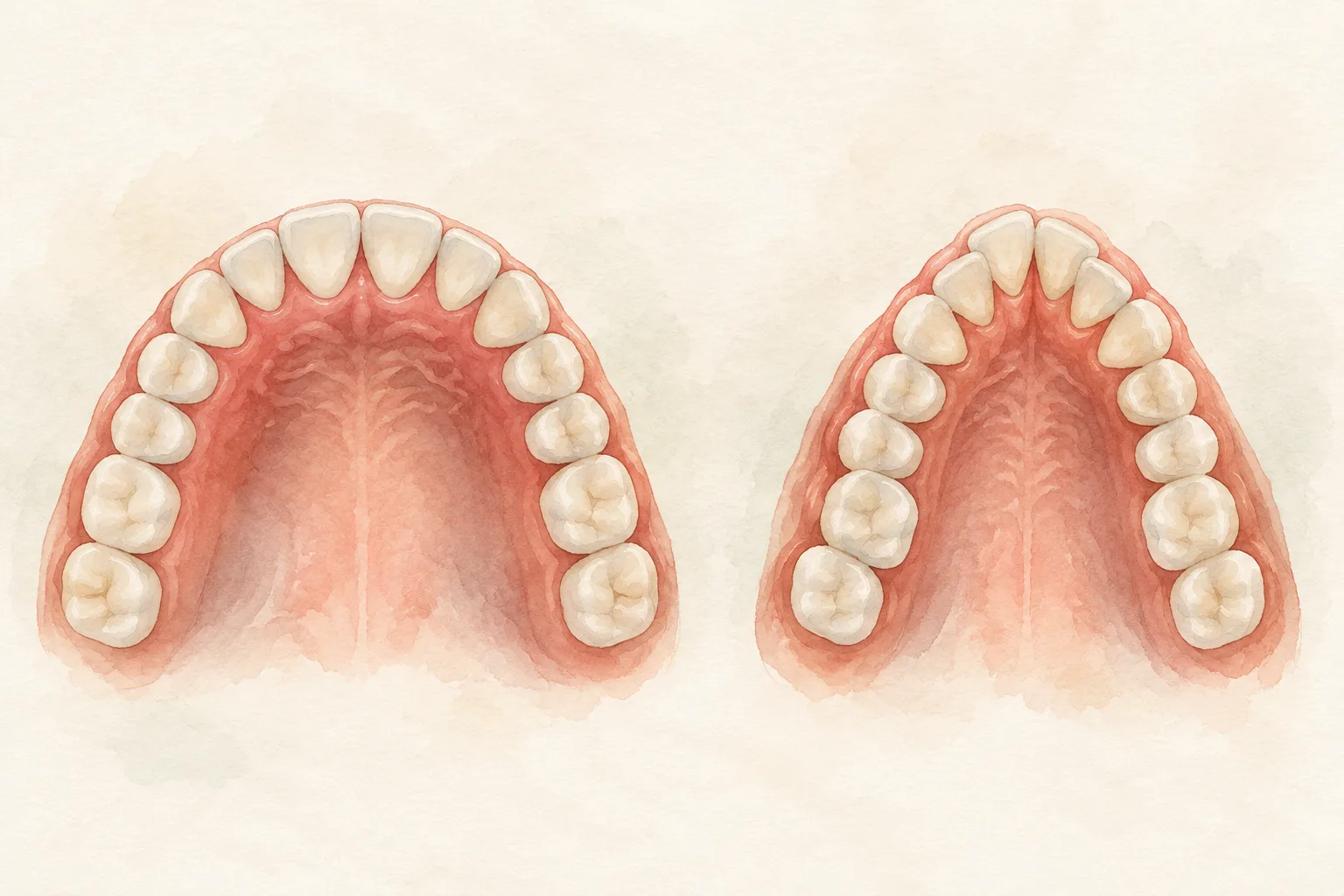
The way we use our muscles helps shape the environment in which our bones and teeth develop.
Swallowing also helps regulate pressure in the middle ears. Muscles of the soft palate briefly help open the Eustachian tubes, allowing pressure to equalize between the middle ear and the back of the nose.
This is why swallowing or yawning can sometimes relieve the sensation of plugged ears.
The tongue, palate, throat, and surrounding muscles participate in functions that extend well beyond the mouth.
What happens when these functions are disrupted?
When the tongue rests low in the mouth, the lips remain apart, or swallowing requires excessive muscular effort, the body may develop compensatory patterns.
Some individuals experience difficulties with chewing, swallowing, oral coordination, jaw tension, or maintaining comfortable nasal breathing.
Others may report persistent congestion, postnasal drip, frequent throat clearing, a sensitive gag reflex, difficulty managing certain food textures, or sensations of fullness in the ears.
Clenching, grinding, jaw discomfort, and temporomandibular joint dysfunction may also be present.
These symptoms have many possible causes. They do not necessarily result from tongue dysfunction, but they are important to consider when evaluating how the oral muscles, airway, and surrounding structures work together.
For example, persistent ear pressure, hearing changes, tinnitus, excessive earwax, or recurrent ear infections may require evaluation by an ear, nose, and throat specialist. Some children may require ear tubes to address persistent middle ear fluid or recurrent infections. Difficulties with swallowing, coughing, or choking during meals also deserve appropriate medical assessment.
Sometimes the symptoms we notice are not isolated problems, but clues that invite us to look more closely at how different functions interact.
Why dental treatment may not address the whole picture
Dental appliances, orthodontic treatment, and night guards can serve important purposes.
A night guard, for example, may help protect teeth from the damaging effects of grinding.
However, protecting the teeth does not necessarily explain why someone is clenching or grinding in the first place.
Depending on its design, an oral appliance may also influence the space available for the tongue to rest comfortably against the palate.
This does not mean that night guards are inappropriate. It means we should consider how an appliance interacts with the person's oral function, breathing, and sleep.
Likewise, dental treatment or intervention by an ear, nose, and throat specialist may be necessary to address structural concerns or restore a clear nasal airway. However, treating the structural problem does not always resolve habitual patterns of breathing, tongue posture, or muscular coordination.
Once comfortable nasal breathing is possible, some individuals may benefit from learning to establish appropriate oral resting posture and more coordinated muscle function.
Protecting or correcting a structure and restoring healthy function are two different, but sometimes equally important, parts of care.
Why these patterns matter during development
During childhood, the forces created by the tongue, lips, cheeks, and chewing muscles interact with growing bones.
When these functions are altered, the balance of forces can change.
The tongue's repeated contact with the palate during resting posture and swallowing is one part of the mechanical environment in which the upper jaw develops.
Genetics and many other factors influence craniofacial growth, but oral function is an important part of the developmental environment.
A child who habitually breathes through the mouth, maintains a low tongue resting position, or has difficulty coordinating swallowing may experience a different pattern of muscular forces than a child who breathes comfortably through the nose and demonstrates coordinated oral function.
This is why we look beyond the position of the teeth to understand how the tongue moves, where it rests, how a person swallows, and whether nasal breathing is comfortable and accessible.
The goal is not simply to change where the tongue sits. It is to understand how breathing, muscular function, and structure support one another throughout life.
How we use our muscles can influence development, and the structures we develop can influence how those muscles function.
Why the airway matters
Your airway is the passage that allows air to move between your nose, throat, and lungs. Its size, shape, and surrounding tissues influence how easily air can move, particularly during sleep.
When awake, our muscles actively help maintain an open airway. During sleep, muscle activity changes. For some people, this makes the airway more vulnerable to narrowing or obstruction.
The body may respond with increased breathing effort, brief awakenings, or changes in sleep continuity. These interruptions are not always remembered in the morning.
Some people experience snoring or obvious breathing disturbances. Others primarily notice a dry mouth, sore jaw, fatigue, restless sleep, morning headaches, or difficulty concentrating.
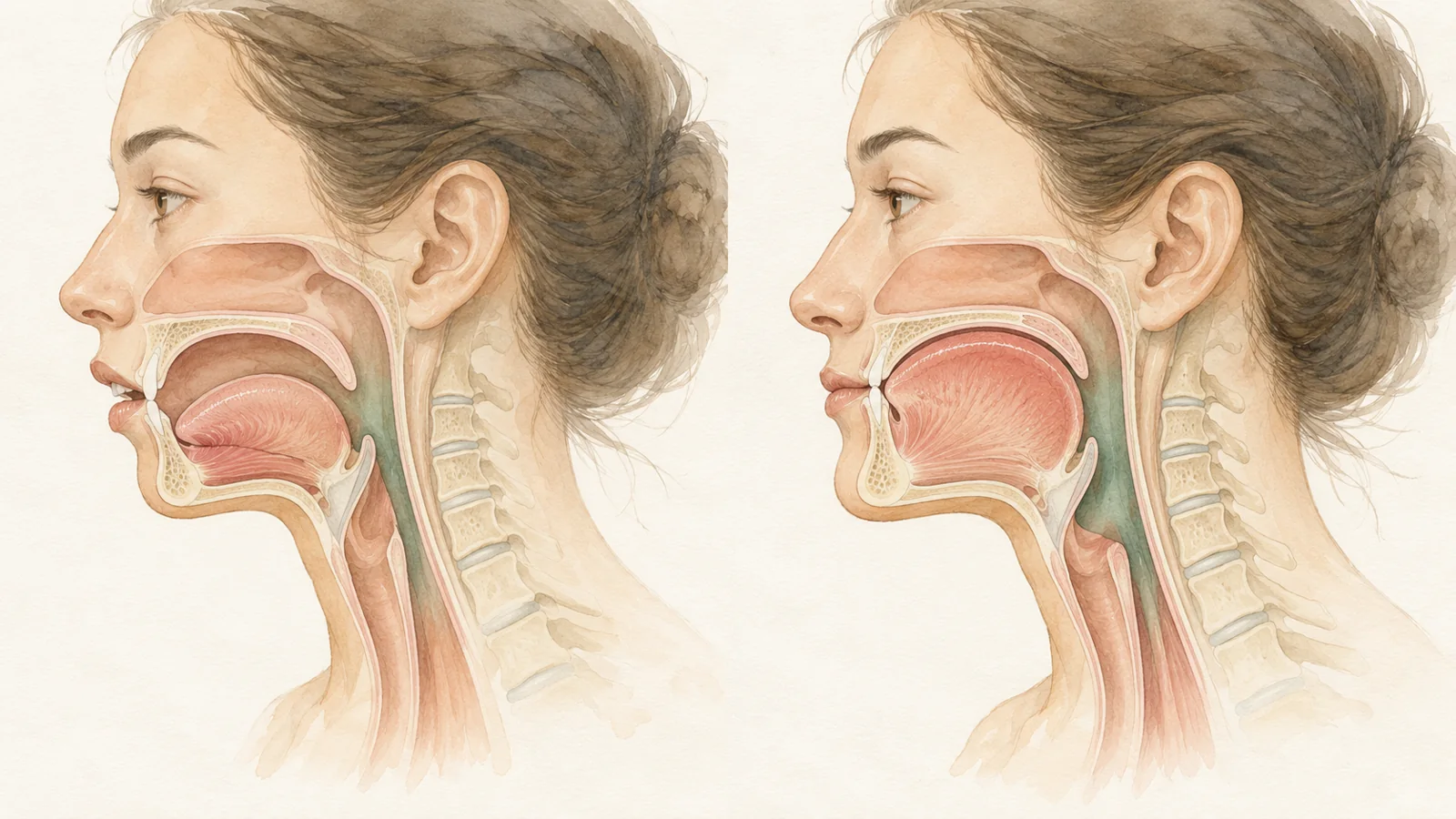
The relationship between the nose, tongue, and jaw
Breathing through the nose is an important part of normal respiratory function. The nose warms, filters, and humidifies incoming air. It also produces nitric oxide, which participates in several physiological processes.
Comfortable nasal breathing can help support a natural resting relationship between the lips, tongue, and jaw. But nasal breathing is not equally accessible to everyone.
Allergies, congestion, structural differences, and other conditions may make it difficult. Likewise, a tongue that cannot move or rest comfortably against the palate may influence swallowing, oral posture, and muscular coordination.
Anatomically, the upper jaw forms the floor of the nasal cavity. When the upper jaw is narrow and the palate is high and vaulted, the space available for the nasal passages may also be reduced. These structural differences can sometimes occur alongside a deviated nasal septum, further limiting airflow. When the nasal passages are already narrow, even mild inflammation or swelling from allergies or congestion can make nasal breathing more difficult.
The smaller the space available for air to move, the greater the impact even a little swelling may have on comfortable breathing.
When we habitually breathe through the mouth, air bypasses the nose's natural filtration, warming, and humidifying functions. This can contribute to dryness and irritation of the mouth and throat. In children, chronic mouth breathing may also be associated with enlarged or inflamed tonsils and adenoids, although these tissues can themselves obstruct nasal breathing and contribute to the development of mouth breathing.
Mouth breathing can also reduce saliva's protective effects, increasing the risk of cavities, gingivitis, and periodontal disease. Over time, these changes may affect oral health, comfort, and the way the muscles of the mouth and face function.
Dental treatment or intervention by an ear, nose, and throat specialist may be necessary to address the resulting conditions or restore a clear nasal airway. However, treating the consequences alone may not resolve the habitual patterns that contribute to them. Once nasal breathing is medically possible, reestablishing comfortable nasal breathing, appropriate tongue resting posture, and relaxed lip closure may be important parts of supporting lasting oral and airway health.
These relationships are worth understanding before deciding which intervention may be helpful.
Why structure alone does not tell the whole story
Two people can have similar jaw structures and experience very different symptoms. One may sleep comfortably, while the other struggles with fatigue, muscle tension, or disturbed sleep.
That is because structure is only part of the picture. Muscle function, breathing behavior, nervous system regulation, sleep physiology, and the body's ability to adapt also matter.
An anatomical finding does not automatically explain a person's symptoms or establish the need for treatment.
We need to understand not only what the body looks like, but how it functions.
Understanding before intervention
Orthodontic treatment, dental appliances, airway procedures, and tongue tie release may be appropriate for some individuals. Each addresses a particular aspect of structure or function.
But changing a structure does not necessarily teach the muscles how to work differently. And improving muscle function cannot always overcome a significant structural limitation.
This is why thoughtful evaluation and coordination among healthcare professionals matter. At Breathe Colorado, we explore the relationship between facial structure, oral muscle function, breathing, and sleep.
The goal is to identify what may be limiting function, what may be responsive to therapy, and when additional evaluation or care is appropriate.
The most useful question is not simply what needs to change, but what the body needs in order to function well.
Breathe effortlessly. Be well. · Laura Barlow, CBBA, CSOM, INHC